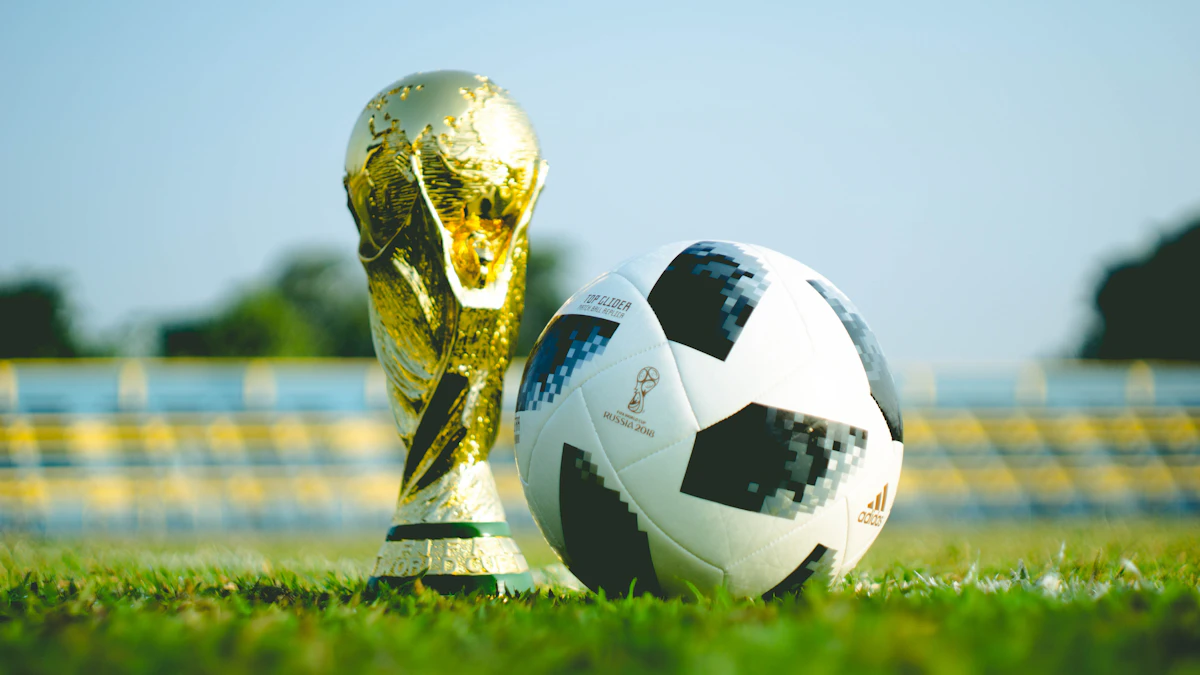
The FIFA World Cup is not just the biggest event in football; it is one of the most powerful sporting experiences on Earth. Every four years, it turns cities into celebrations, players into national heroes, and ordinary matches into moments that live forever in sporting memory. For fans, the World Cup offers everything at once: elite skill, tactical drama, emotion, history, heartbreak, redemption, and the rare feeling that the entire planet is watching the same story unfold together.
What makes the tournament special is its scale and its meaning. Club football may deliver quality week after week, but the World Cup carries a different kind of pressure because players are not only representing themselves or their teams. They are carrying the hopes of entire nations. One goal can become a symbol of pride for millions, while one mistake can become part of football folklore for decades. That emotional weight is why the World Cup feels larger than sport. It becomes part of culture, identity, and global conversation.
The Origins of Football's Biggest Stage
The history of the World Cup began in 1930, when FIFA launched the first edition of the tournament in Uruguay. That opening competition marked the beginning of a new era for international football, giving nations a dedicated global championship instead of relying only on Olympic competition. Uruguay won the inaugural title, and from that point forward the World Cup quickly grew into the sport's highest honor.
The tournament has been held every four years, with the exception of interruptions caused by World War II. That continuity has helped the World Cup build a rhythm unlike any other competition. Because fans wait years between editions, every tournament feels rare and precious. Every cycle builds anticipation, debate, qualification drama, and the dream that this might finally be a country's year.
Why the World Cup matters: it combines sporting excellence with national emotion in a way no club tournament can fully match. That mix is the main reason it is widely regarded as the most watched sporting event in the world.
Why the Tournament Captivates Billions
The FIFA World Cup reaches beyond football fans. People who do not follow leagues all year still tune in because the event feels universal. It is short enough to remain intense, broad enough to include multiple continents, and dramatic enough to create daily headlines. The group stage introduces fresh stories, the knockout rounds raise the pressure, and by the time the final arrives the whole competition feels like a shared global journey.
Another reason for its appeal is unpredictability. The World Cup has room for giants and underdogs alike. Established powers arrive with history, talent, and expectation, but smaller football nations often produce the tournament's most inspiring moments. A disciplined defensive display, a stunning upset, or a breakout star from an unexpected country can completely reshape the bracket. That possibility gives every match importance and every fan hope.

Legends Made on the World Cup Stage
The World Cup has always been football's ultimate proving ground. Great players can dominate club football for years, but a defining World Cup can elevate them into a different level of fame. Pelé became one of the tournament's earliest icons, helping Brazil establish itself as a football superpower. Diego Maradona later created one of the most unforgettable individual performances in tournament history in 1986, blending genius, controversy, and leadership in a way only the World Cup can magnify.
Other stars have also shaped the competition through consistency and clutch performances. Miroslav Klose became the leading men's World Cup goalscorer with 16 goals across four tournaments, showing how longevity and composure matter as much as brilliance. Zinedine Zidane, Ronaldo, Andrés Iniesta, Kylian Mbappé, and Lionel Messi all added their own chapters to the World Cup story, proving that while eras change, the tournament continues to create football immortality.
These players are remembered not only for trophies or statistics, but for moments. A volley in a final, a dribble past defenders, a penalty saved under unbearable tension, or a celebration that becomes part of world culture can define how generations remember a tournament. The World Cup compresses pressure and beauty into a few weeks, and that is why its biggest stars seem to glow brighter than in any other competition.
More Than Tactics and Trophies
The World Cup is also about emotion beyond the pitch. Families gather to watch it. Streets fill with flags and chants. Entire countries pause for kickoff. Even people who have never visited one another's nations suddenly learn chants, players, colors, and customs from around the world. In that way, the tournament becomes a form of cultural exchange as much as a football contest.
At the same time, the competition can be cruel. For every winner lifting the trophy, there are favorites sent home early, golden generations that fall short, and players who carry painful memories for life. That emotional contrast is part of what gives the World Cup such power. Joy feels bigger because disappointment is real, and triumph feels historic because failure is always close.
The Women's World Cup and the Global Game
FIFA has also organized the Women's World Cup since 1991, and its growth has strengthened football's global appeal. The women's tournament has expanded the sport's reach, created new icons, and shown that the passion surrounding international football is not limited to one side of the game. It has helped inspire young players around the world and has pushed the sport toward broader recognition, greater investment, and deeper cultural relevance.
Together, the men's and women's tournaments show the true breadth of football's global community. They give nations a platform to compete, inspire, and represent themselves before a massive international audience. That wider ecosystem has made the name "World Cup" even more powerful than before.
The 2026 World Cup and a New Era
The next major chapter comes with the 2026 FIFA World Cup, which will be hosted by Canada, Mexico, and the United States. It will be the first men's World Cup staged across three host countries and the first to feature 48 teams. FIFA has confirmed that the tournament will run from 11 June to 19 July 2026, with the opening match in Mexico City and the final in New York New Jersey.
This expanded format means more matches, more nations, and more opportunities for fresh stories to emerge. FIFA has also confirmed that 16 host cities will stage matches across North America, including cities in all three host nations. That structure will make the 2026 edition the biggest in the tournament's history, not only in terms of geography but also in participation and reach.
For fans, that means a wider celebration of football culture. For teams, it means a more demanding path to the trophy. The top two teams from each group and the eight best third-place teams will advance to the round of 32, creating a longer and even more dramatic road to the final. The result should be a tournament that feels both familiar in its prestige and fresh in its scale.
Why the World Cup Remains Unmatched
Many sporting events are huge, but few combine history, talent, identity, and global reach the way the FIFA World Cup does. It is where children dream, veterans seek redemption, and nations see themselves reflected through football. The trophy may be lifted by only one team, but the tournament belongs to the world because every edition leaves behind stories that millions carry with them.
That is why the FIFA World Cup remains the world's greatest football tournament. It is not simply about deciding the best team. It is about creating unforgettable theatre on the biggest stage in the sport, where every pass, save, miss, and goal can become part of world history. As 2026 approaches, the anticipation is building once again, and that familiar feeling proves the World Cup's magic is as strong as ever.